
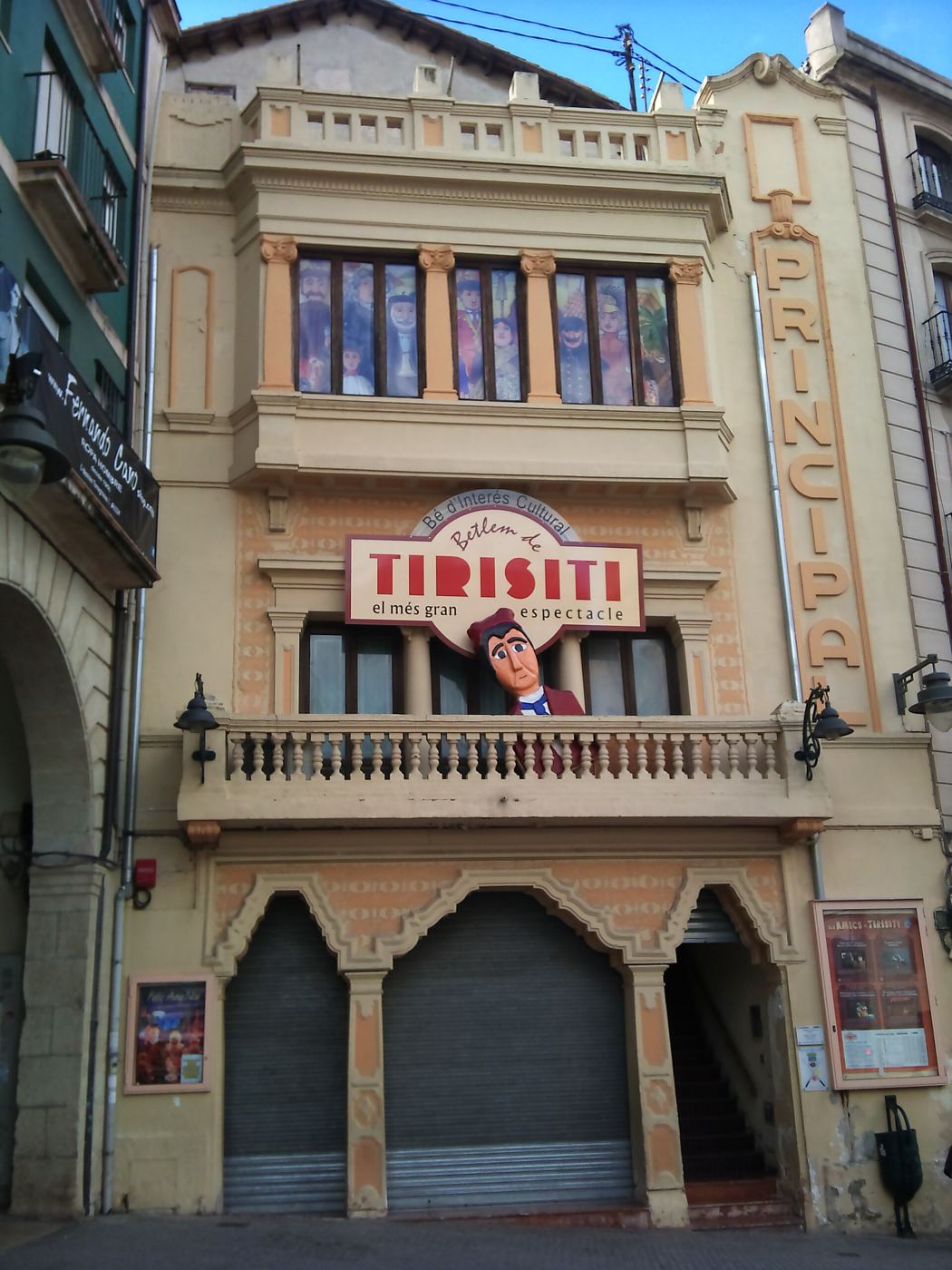
The Betlem de Tirisiti is a puppet nativity play performed on a fixed stage where the whole story unfolds. The stage is built in several layers that create depth. Each puppet is worked by hand with a rod and moves across the stage along rails: it is a “tereseta” show, a Mediterranean tradition that has disappeared everywhere else.
Its roots go back to the late 19th century, when three travelling nativity shows toured Alcoy. In the early 20th century José Esteve Carbonell created two shows from two of them, and in 1920 he merged them into an explosive mix of the Bible story and local folk tales. In 1953 Rafael Coloma bought and restored it; in 1968 José Peidro “Foia” took it over, and in 1975, after a collapse wrecked the whole set, Alejandro Soler restored it in record time. In 1980 Diamante y Rubí took over its management and began to professionalise it.
In 1989 Alcoy City Council took charge and built a booth especially for the performances. The Soler Dénia family rebuilt the stage and puppets and look after them, and the La Dependent company has performed the show ever since. In 2002 the Valencian Government declared it the first Valencian Intangible Cultural Asset. Since 2006 it has been staged at the Teatre Principal, dressed up to recreate an old-time puppet booth.
It all begins on an ordinary day in a corner of the Serra de Mariola. That is where the Holy Family ends up after the flight into Egypt, and where we see the birth of Jesus, complete with the Adoration of the Magi. The innkeeper who turns the Holy Family away is Tirisiti, the hero, who weaves the Bible story together with local events such as the Moors and Christians festival or Milà's hot-air balloon from the early 20th century.